
OPENING OF THE EXHIBITION “HANOIAN ELEGANCE – HANOI’S STORY THROUGH THE ÁO DÀI”
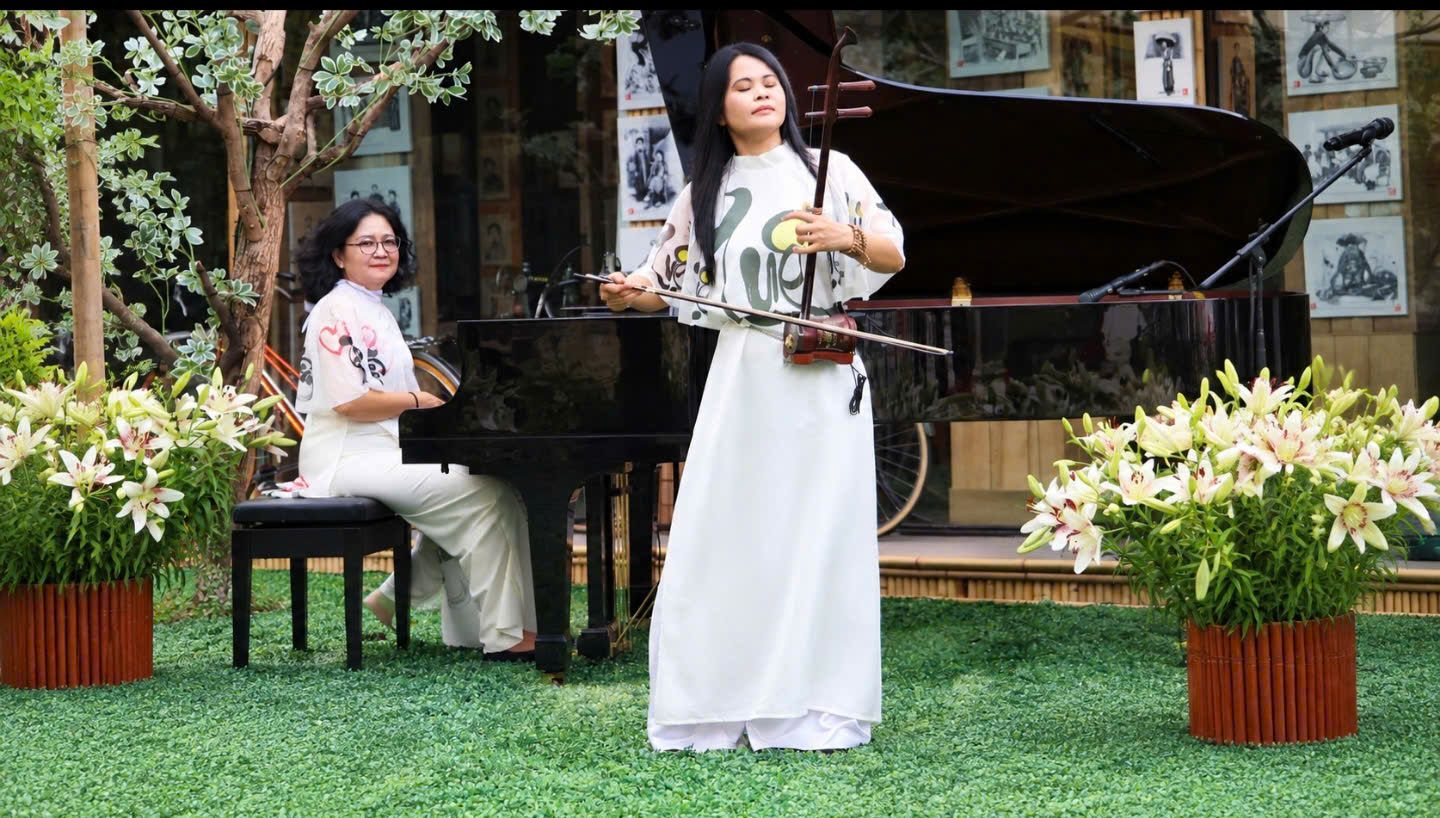
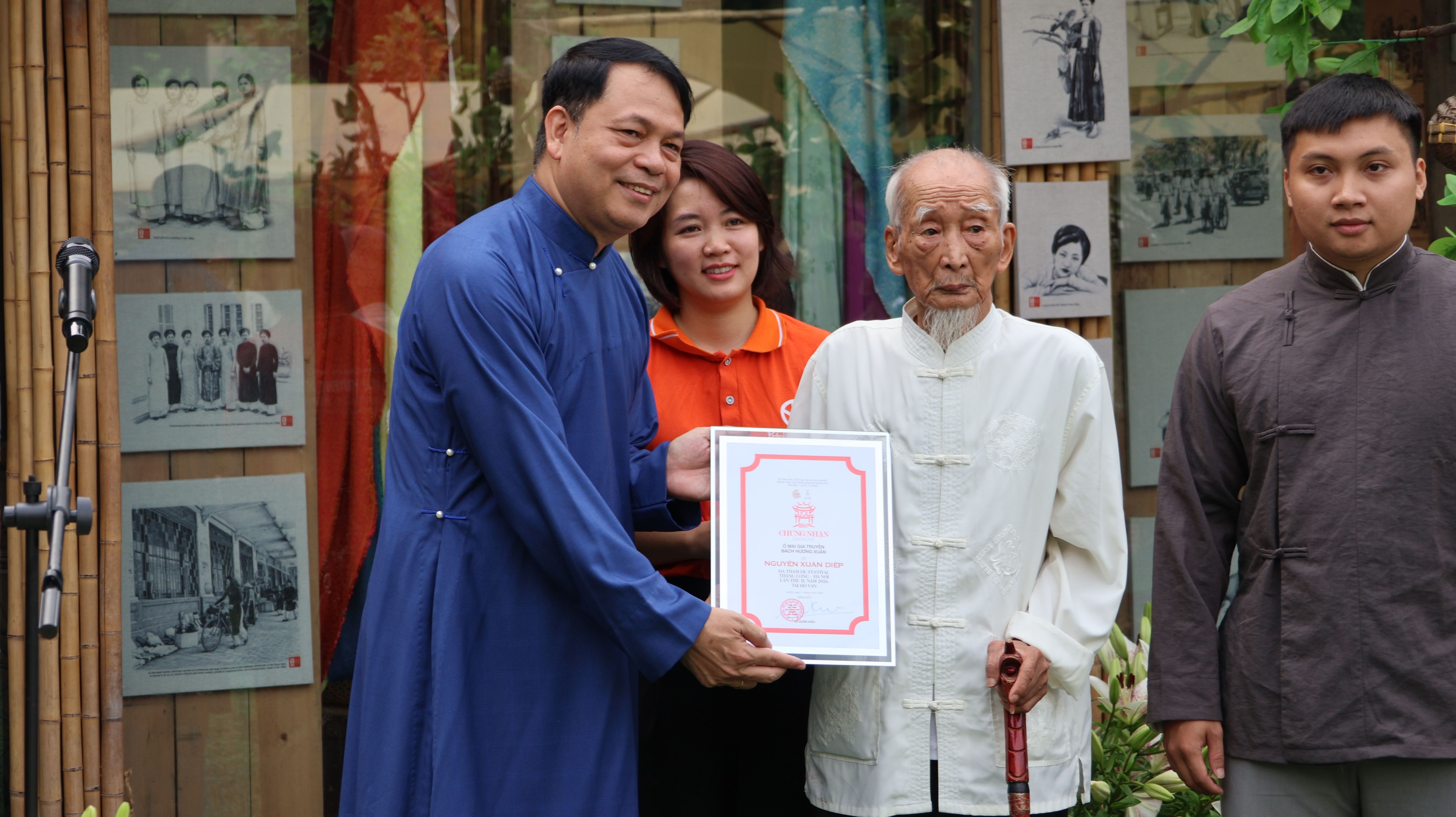
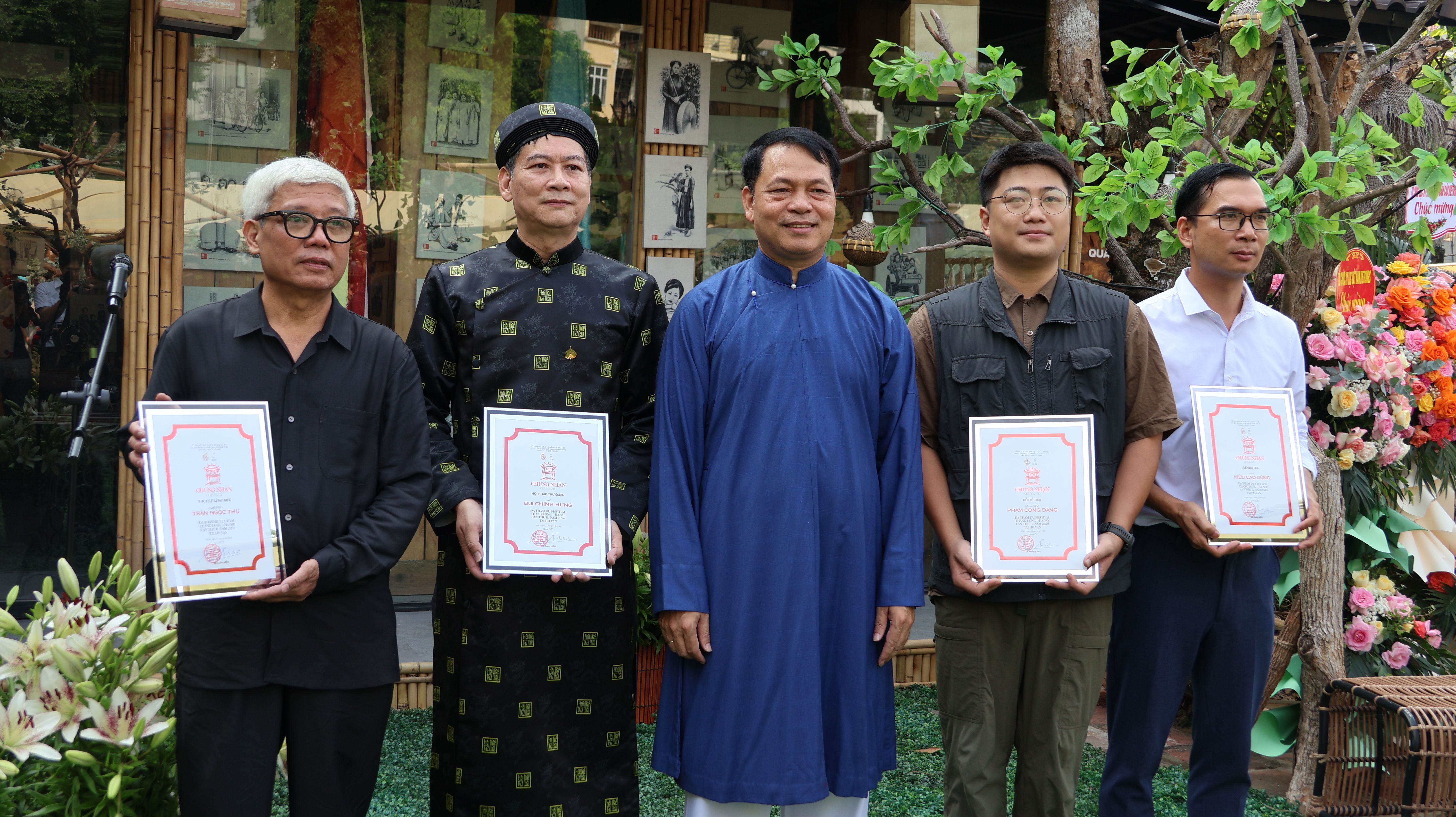
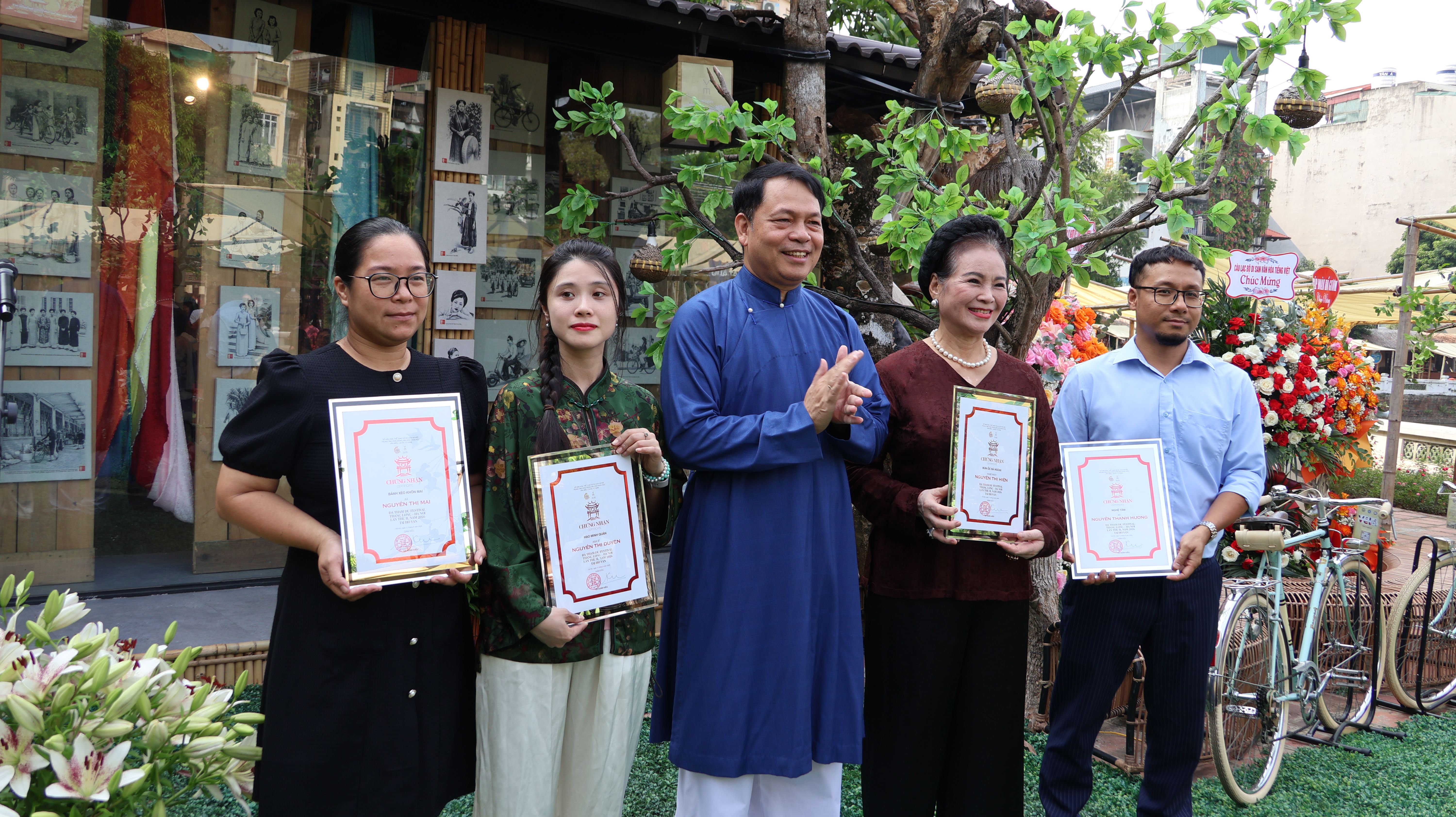
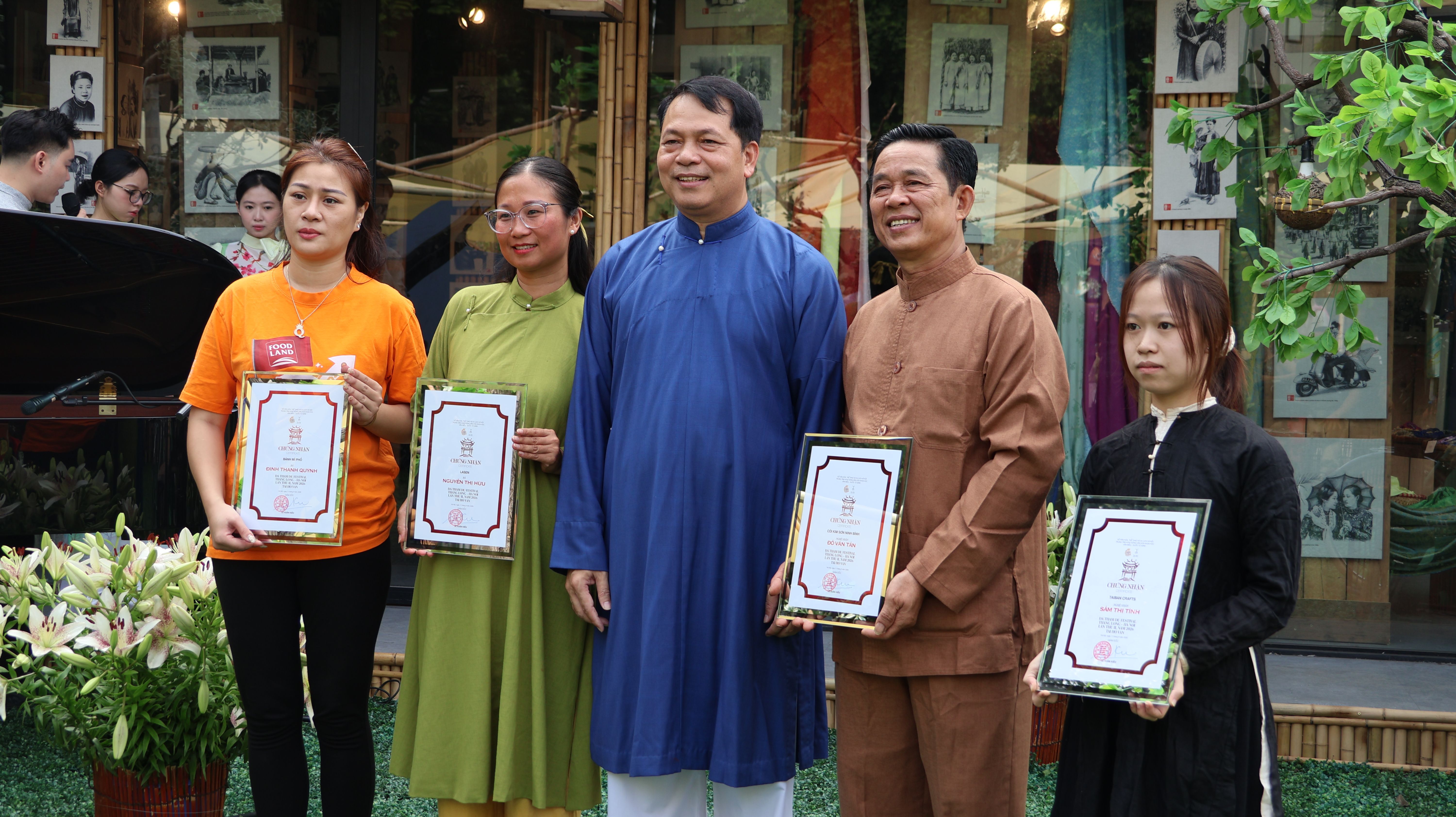
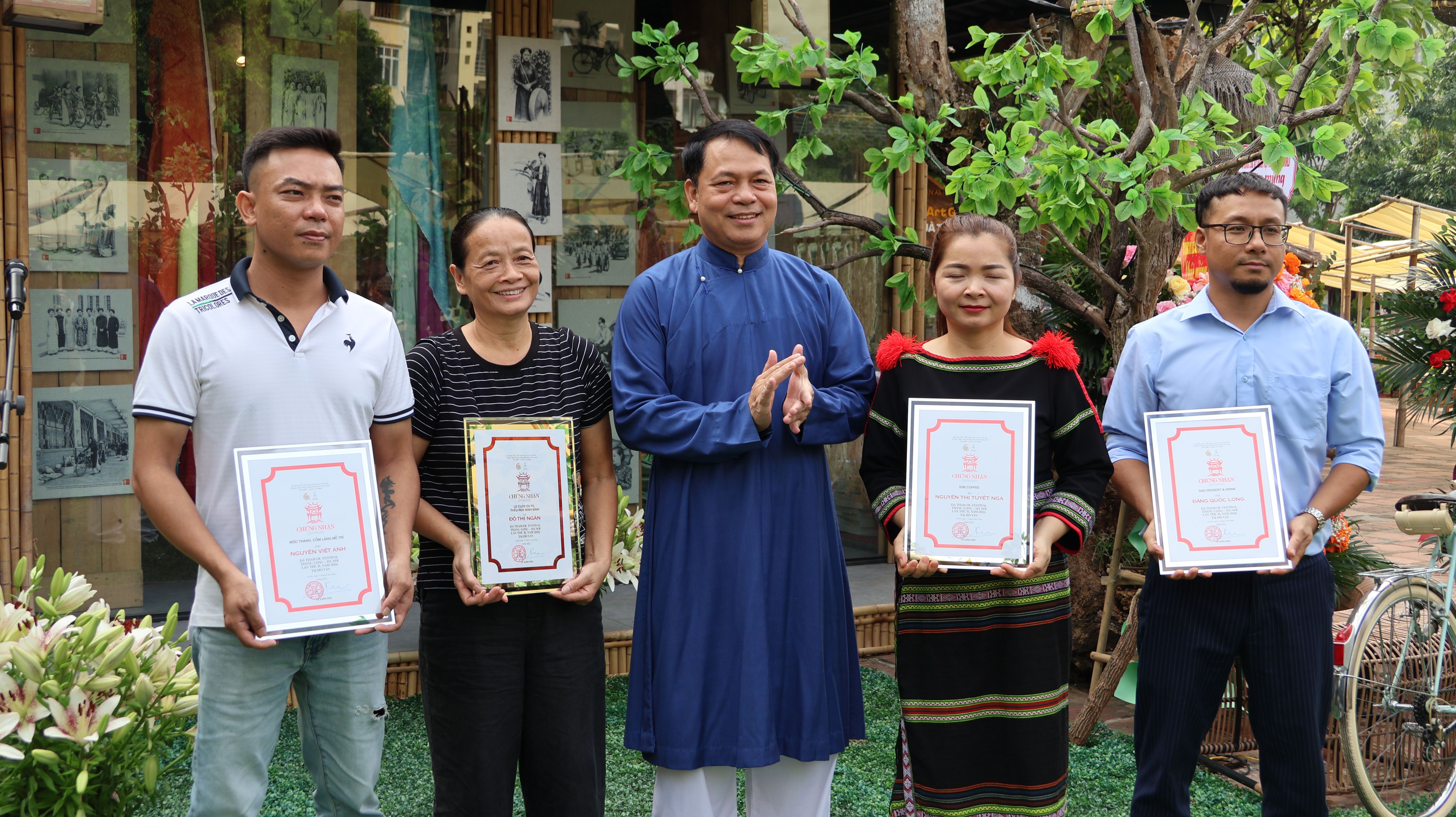
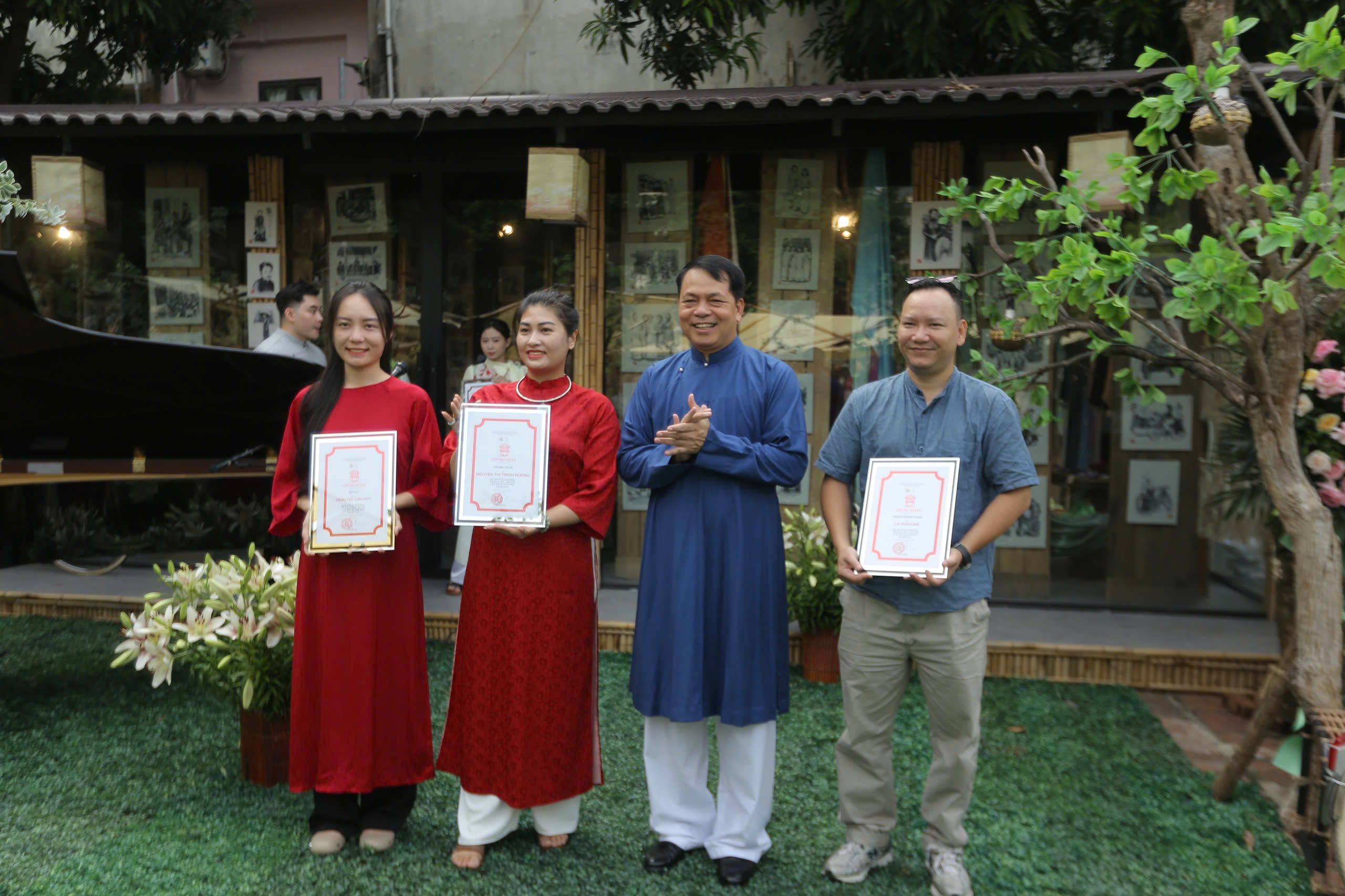
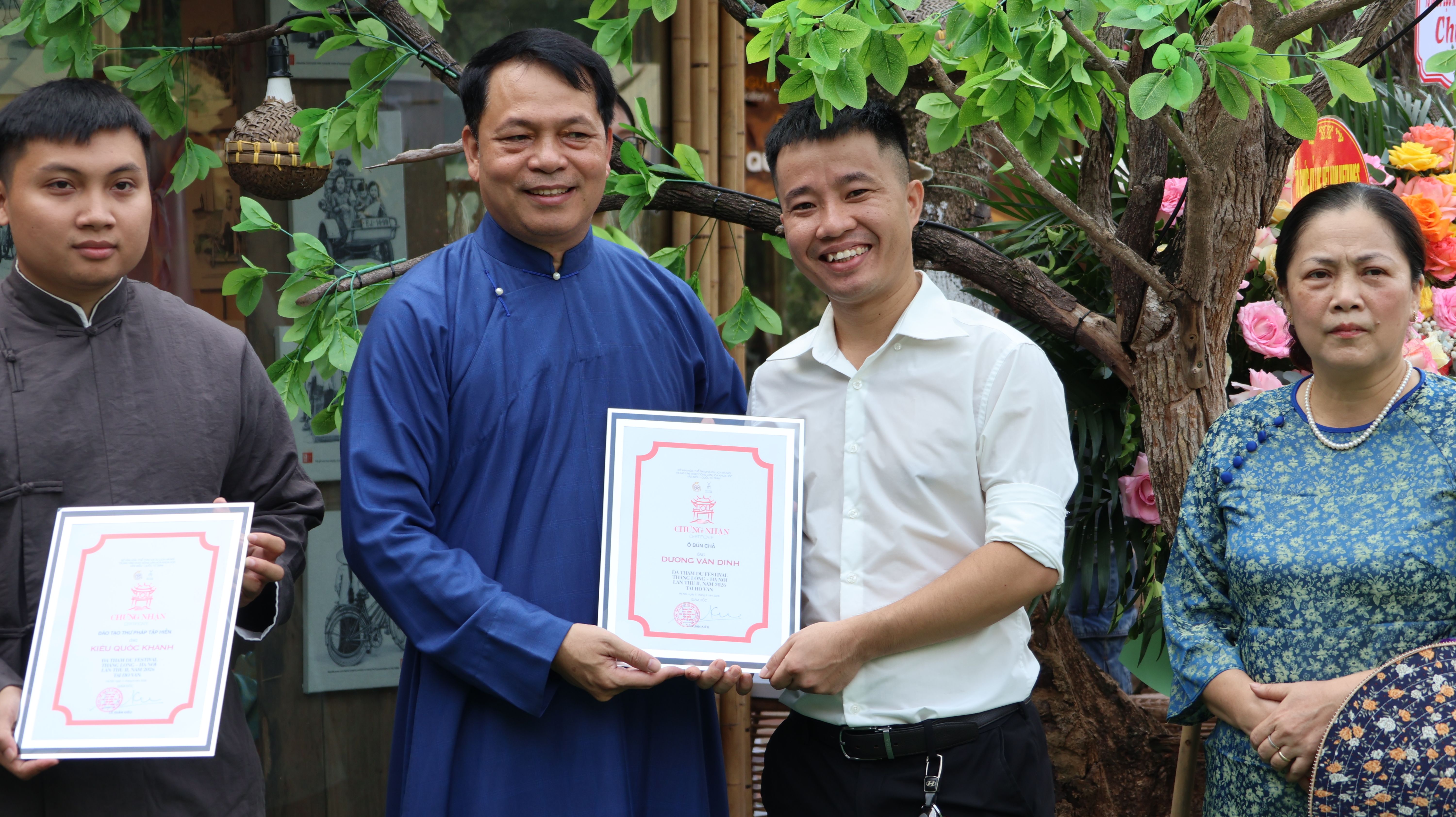
On the morning of September 11, 2026, the Center for Scientific and Cultural Activities of Văn Miếu - Quốc Tử Giám officially opened the exhibition “Hanoian Elegance – Hanoi’s Story Through the Áo Dài” at Văn Lake, Văn Miếu – Quốc Tử Giám. The exhibition was part of a series of cultural activities organized by Hanoi as part of the 2nd Thang Long – Hanoi Festival 2026.
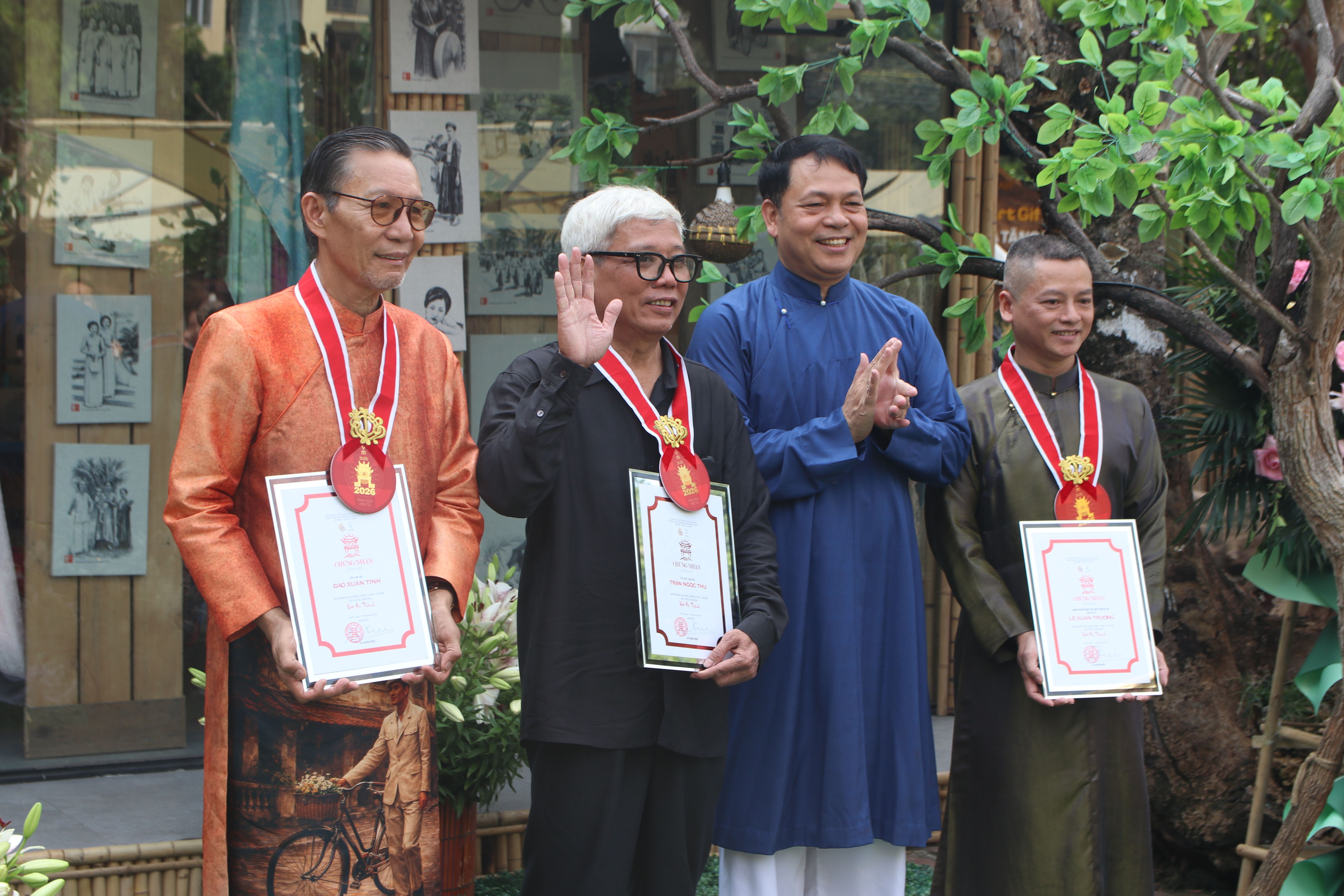
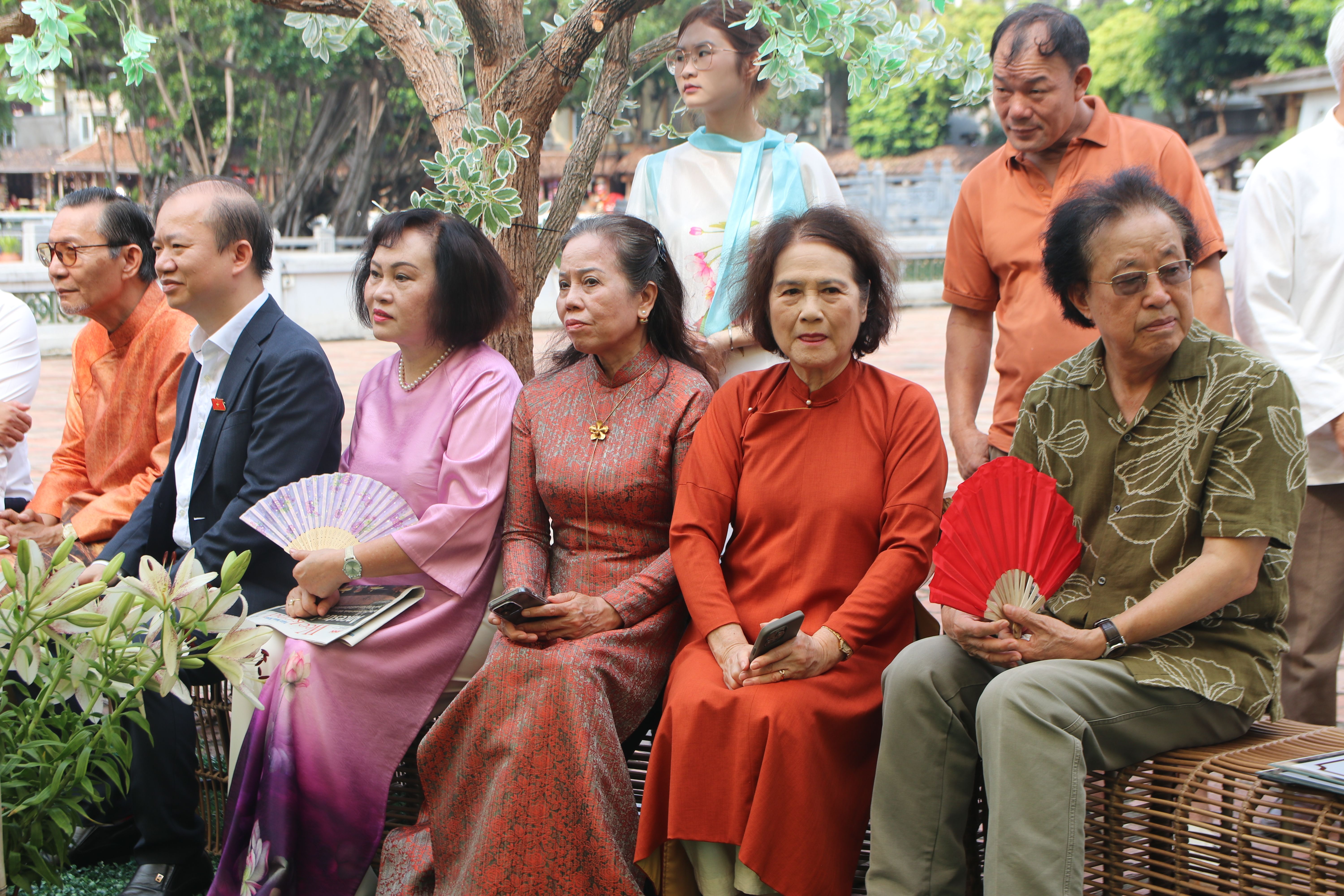
The opening ceremony was attended by Prof. Dr. Bùi Hoài Sơn, Full-time Member of the National Assembly’s Committee on Culture and Social Affairs; Dr. Vũ Thị Minh Hương, Vice-Chairperson of the Memory of the World Committee for Asia and the Pacific (MOWCAP), Member of the National Cultural Heritage Council, and former Director of the State Records and Archives Department; Mr. Hoàng Quốc Việt, Head of the Culture and Arts Division under the Hanoi Party Committee’s Commission for Publicity and Education; Mr. Đào Xuân Tình, collector, world record holder, and Vice President of VietWorld, the Global Vietnamese Records Organization; Ms. Nguyễn Thị Thanh Tâm, Standing Vice President of the Vietnam Áo Dài Cultural Association; Ms. Ninh Thị Tỵ, Hero of Labor and Chairwoman of the Board of Directors of Hồ Gươm Group Joint Stock Company; representatives of the leadership of the Center for Scientific and Cultural Activities of Văn Miếu - Quốc Tử Giám; and a large number of Hanoi residents.
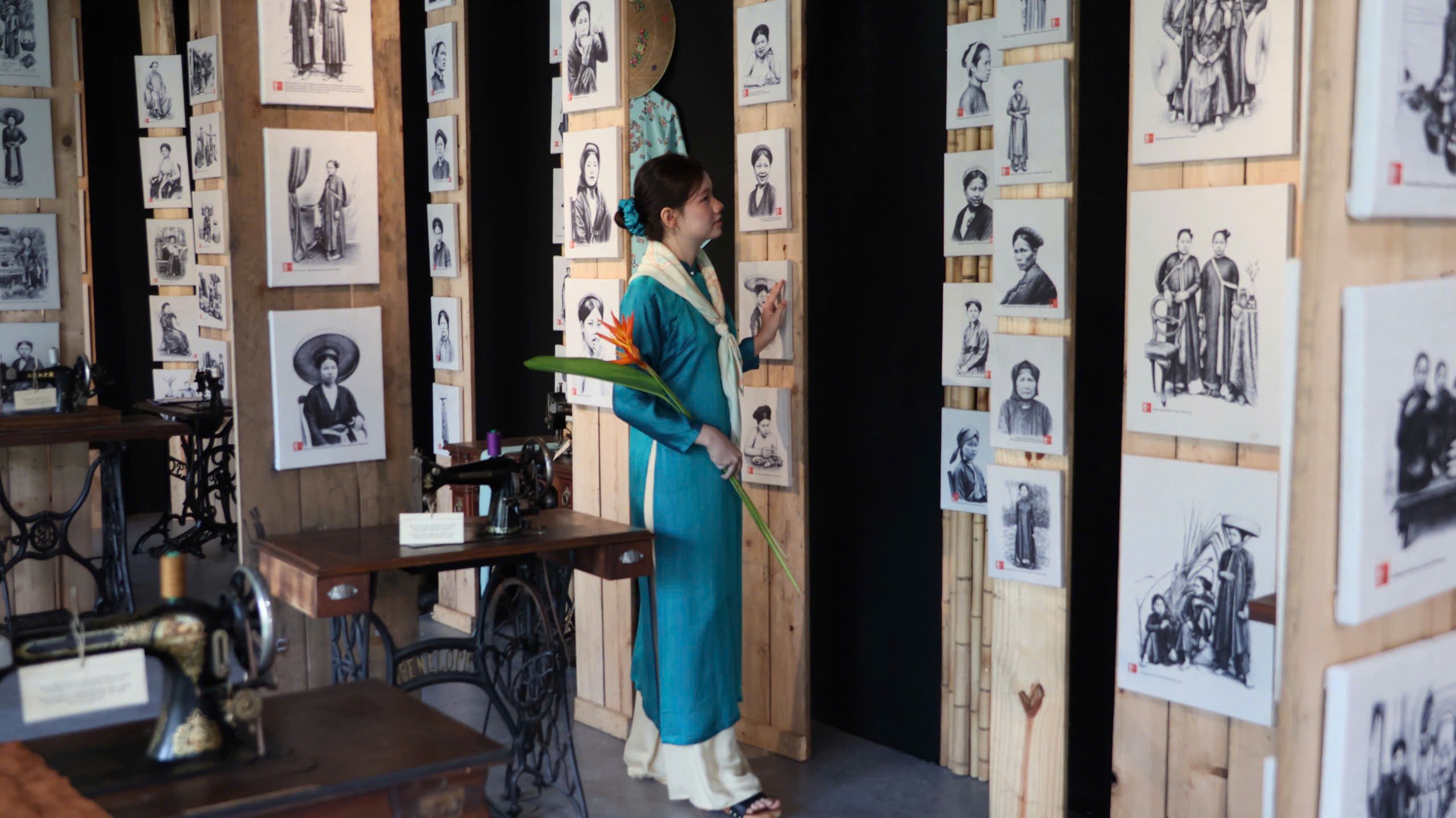
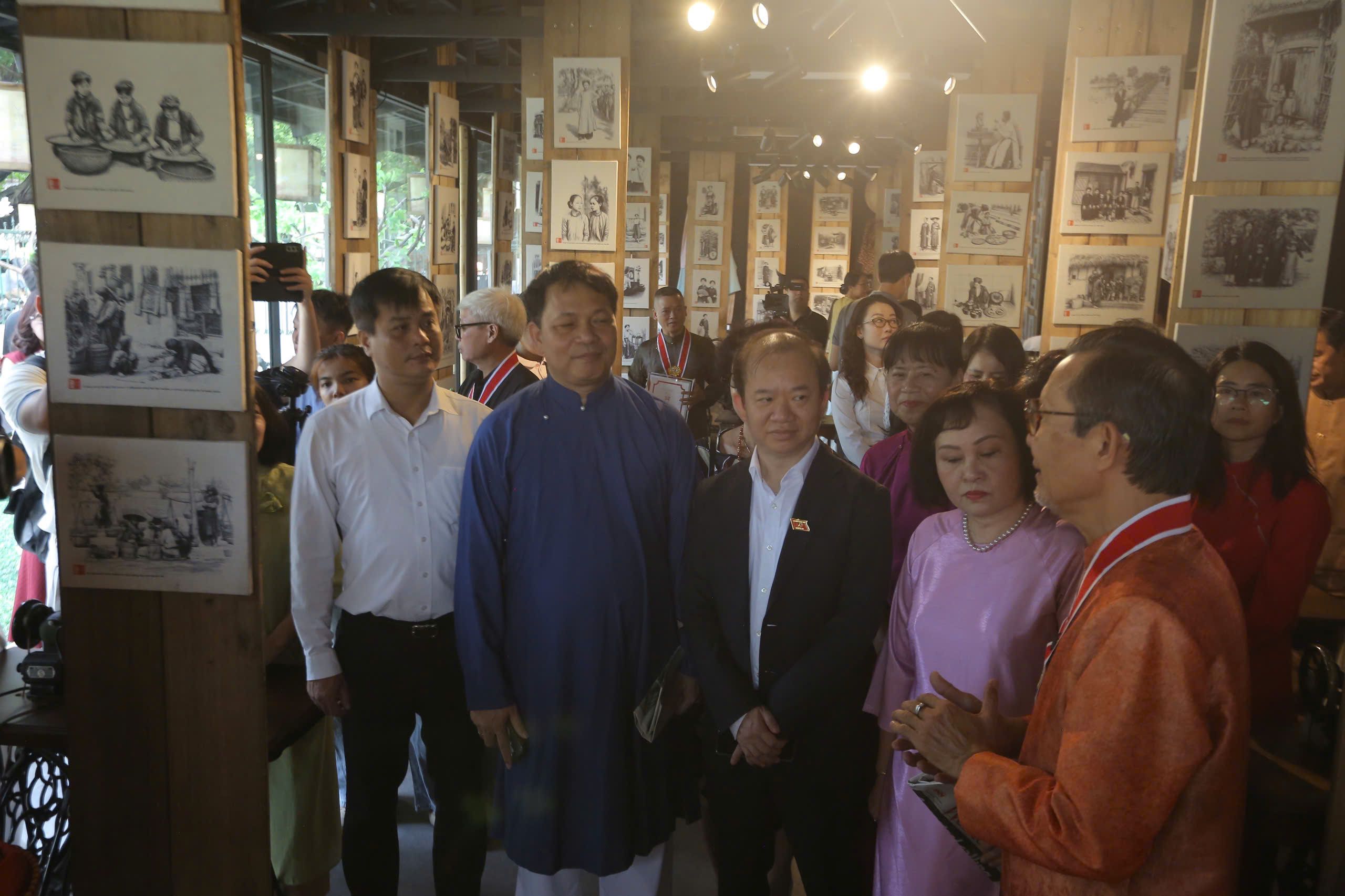
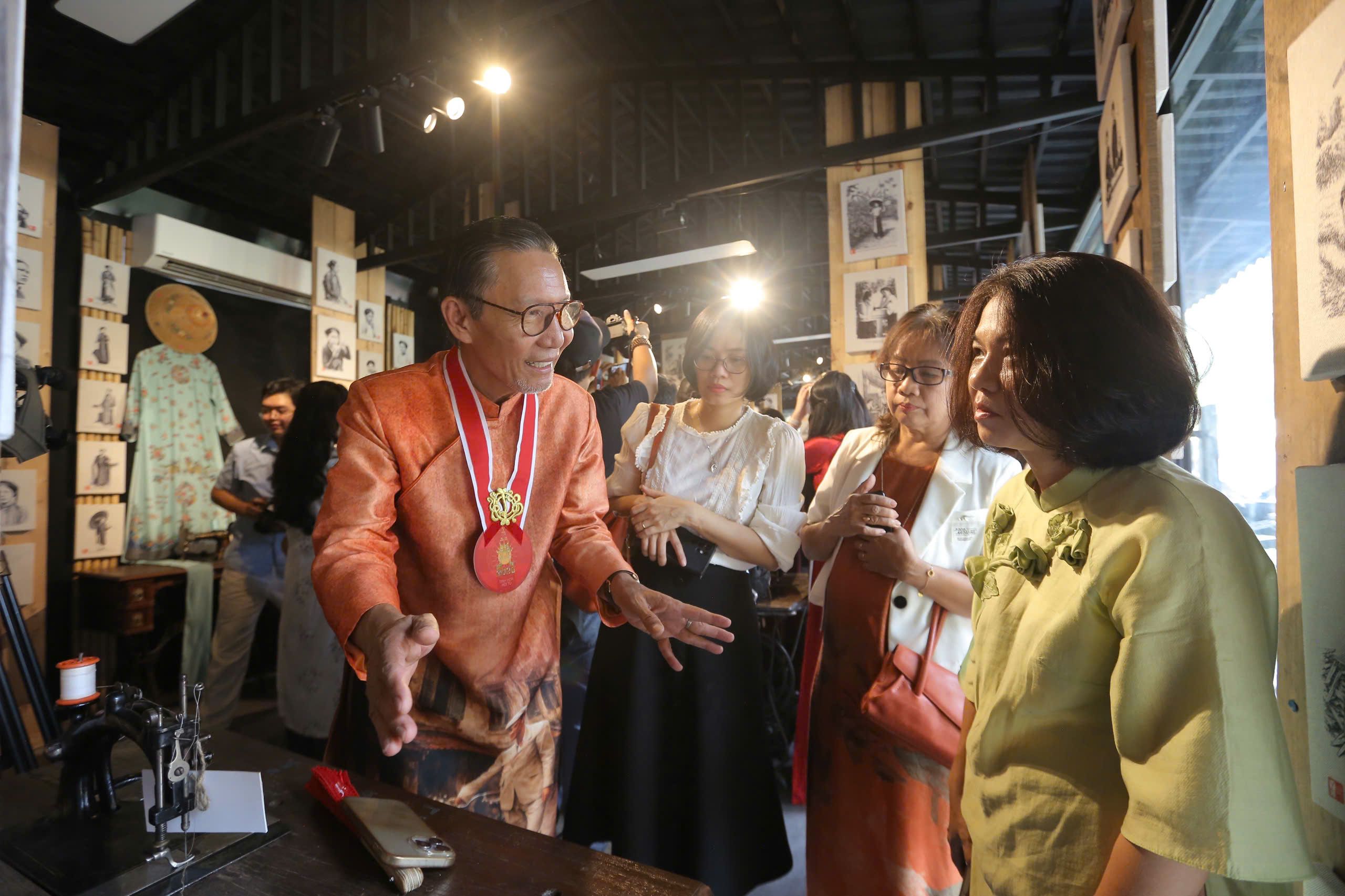
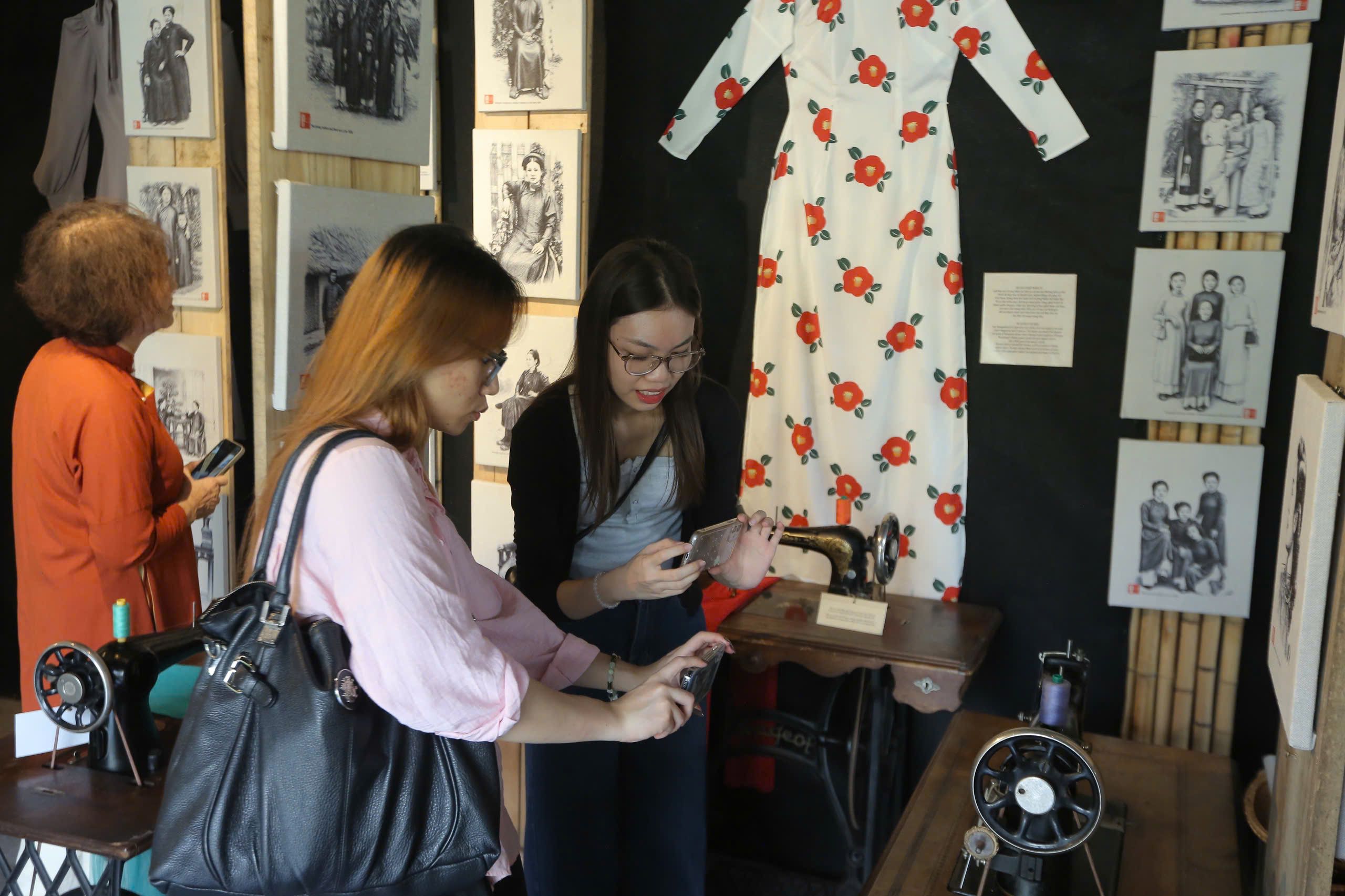
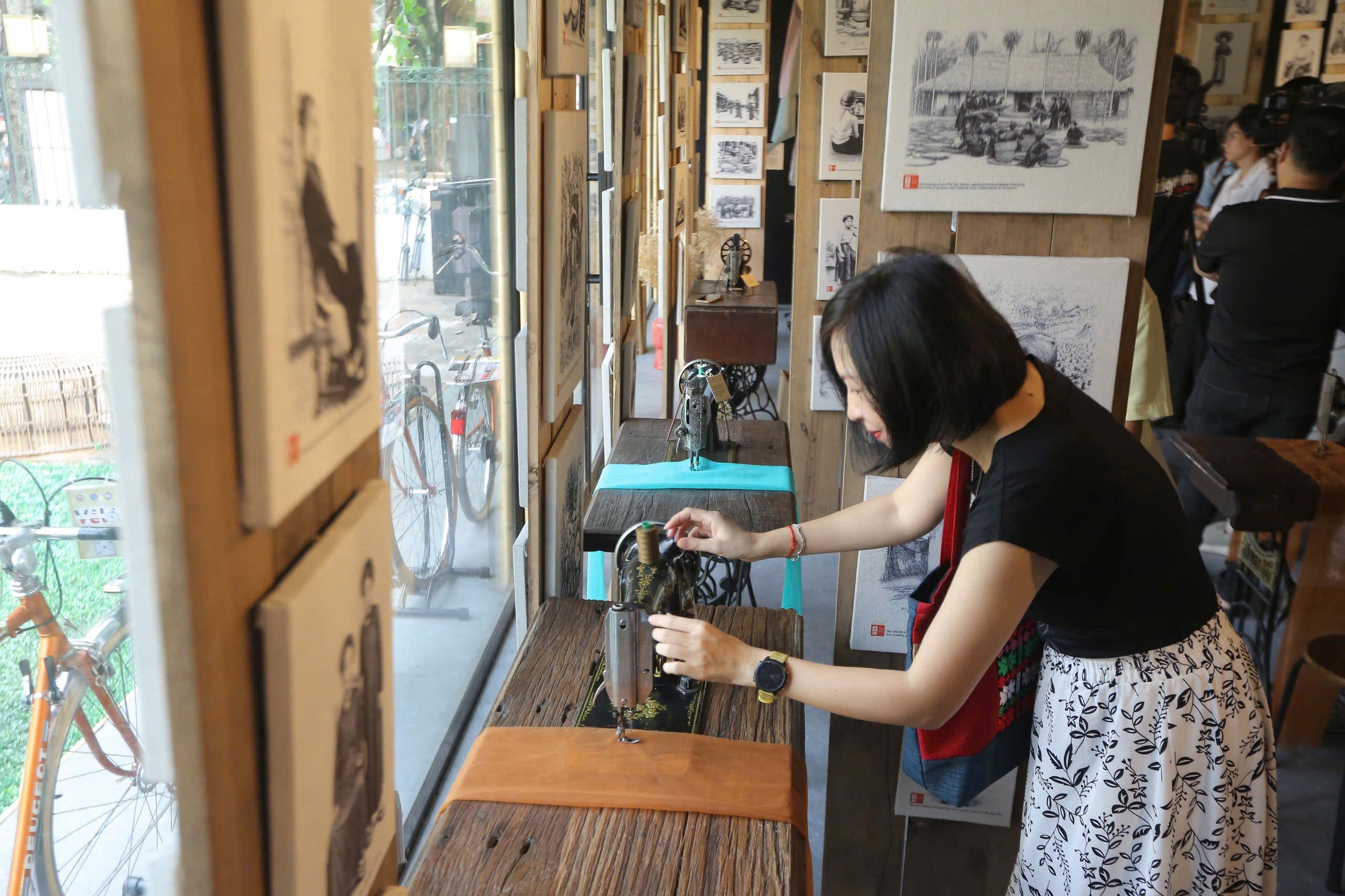
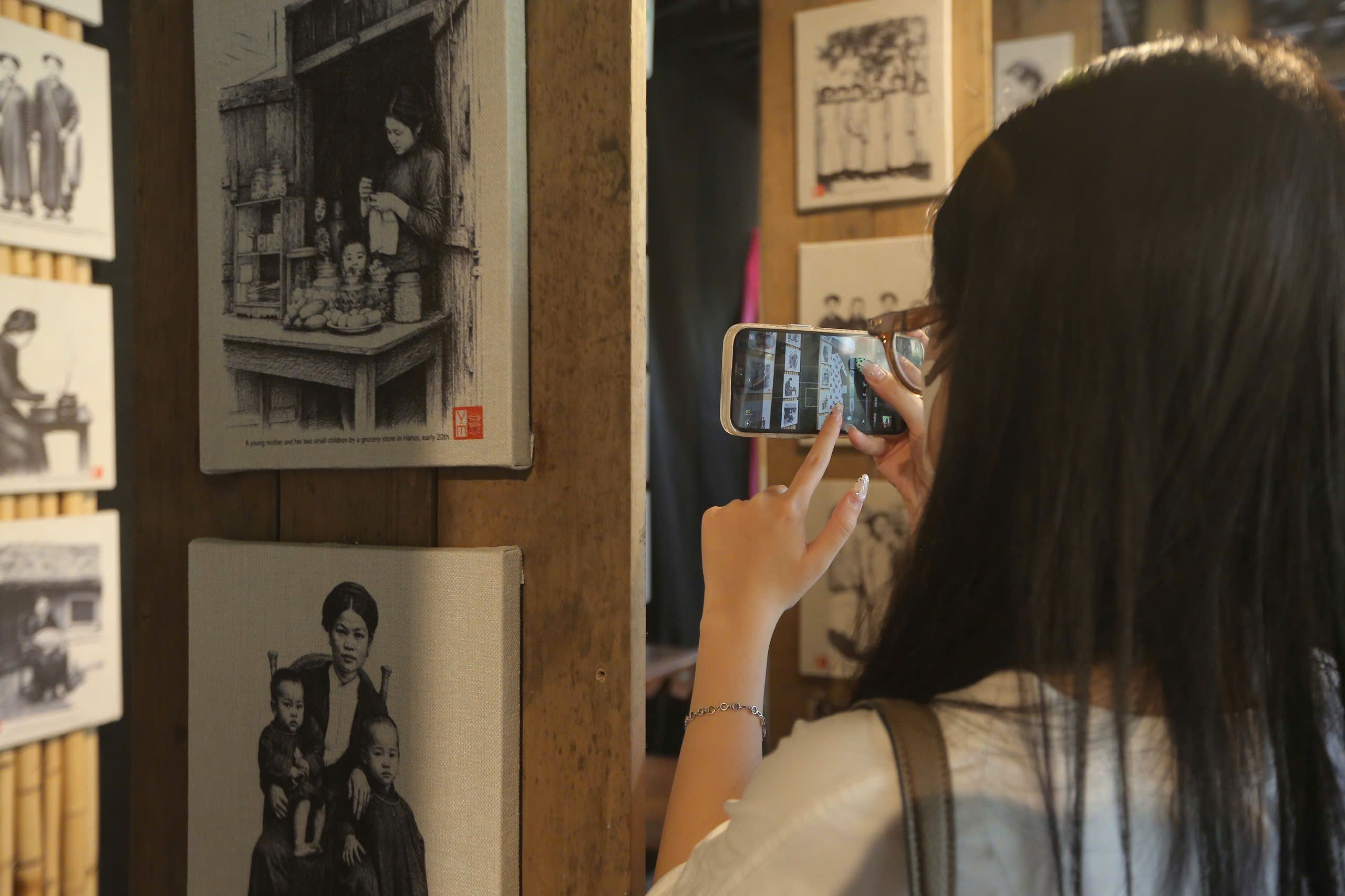
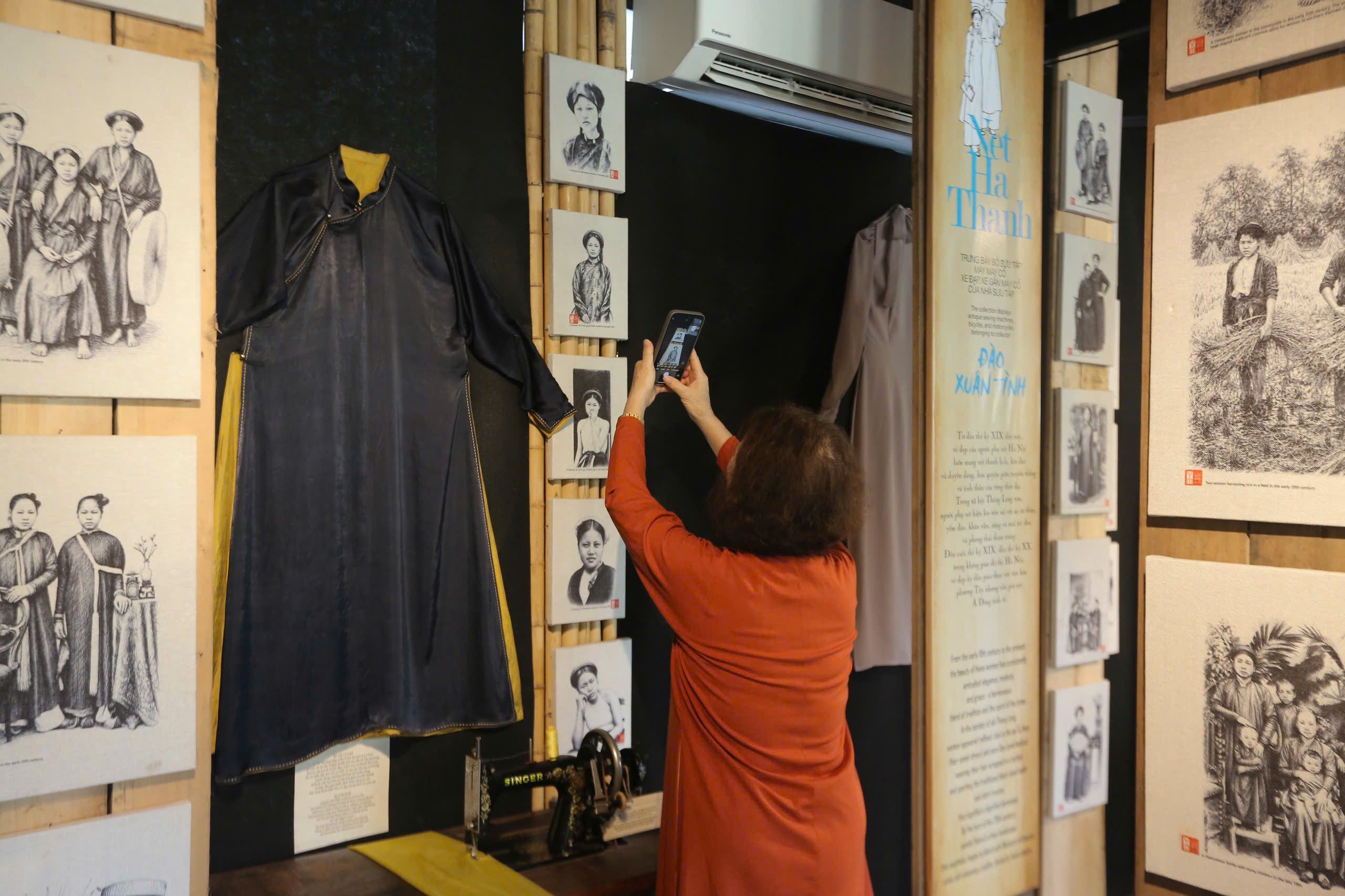
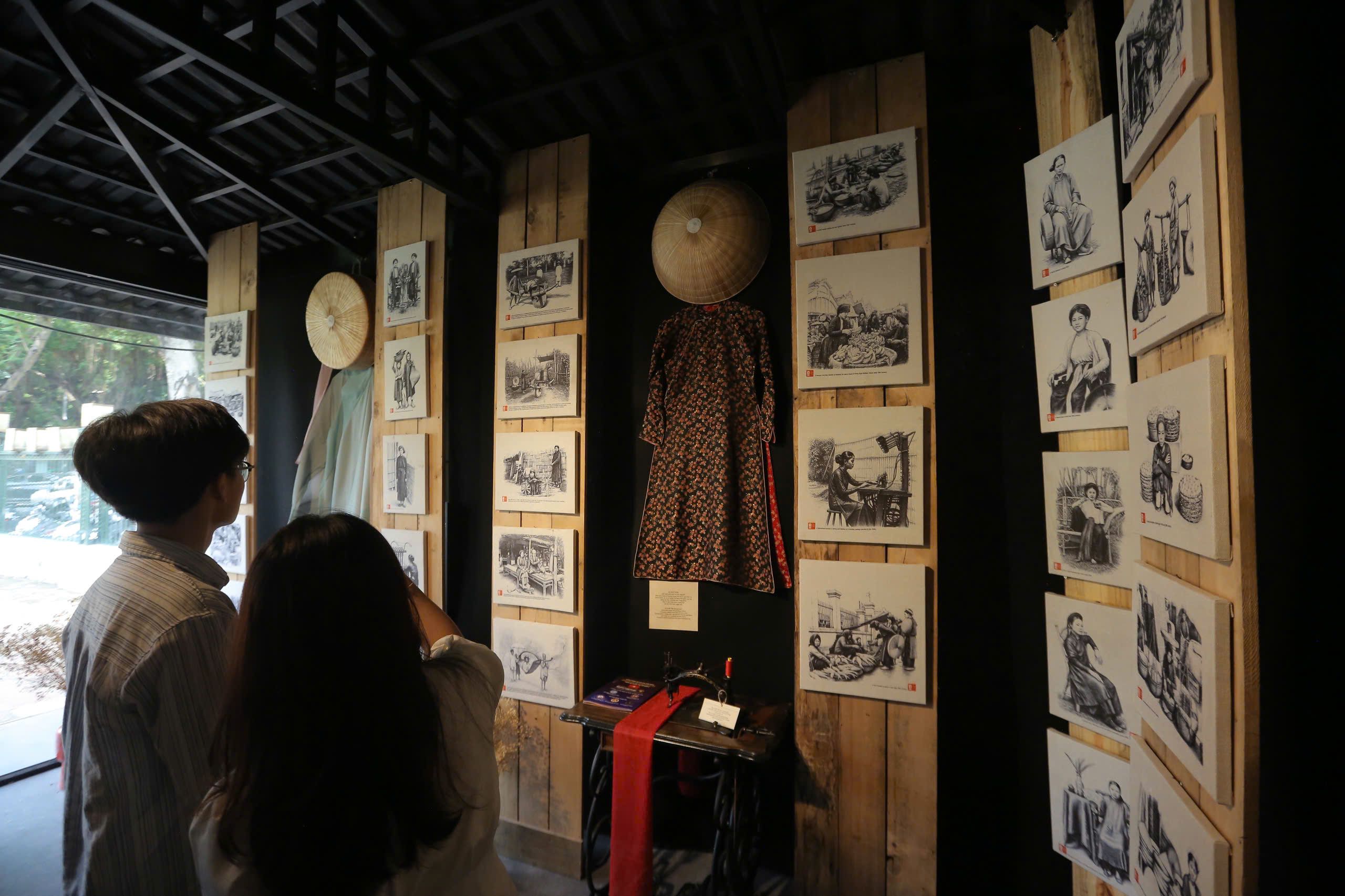
The exhibition “Hanoian Elegance” invites visitors on a journey through Hanoi’s history, presented through photographs, archival materials, historical objects, and collections of áo dài. From traditional clothing and modes of transport to familiar tools of everyday life, each exhibit tells a story of the lifestyles, aesthetic tastes, and collective memories of Hanoians across generations.
A highlight of the exhibition is a collection of nearly 400 canvas artworks created by fine arts students using historical photographs and archival materials with the assistance of artificial intelligence (AI). These works offer a fresh perspective on images of Hanoi from the past, recreating the elegance of the áo dài and the refined style of Hanoians throughout different historical periods.
The evolution of the áo dài is illustrated through a range of styles, from the traditional áo giao lĩnh and áo ngũ thân to the Le Mur and Raglan designs, followed by contemporary interpretations. Each style bears the distinctive characteristics of its era, reflecting changes in fashion, aesthetics, and social life. Despite its continuous evolution, the áo dài has maintained a strong connection with tradition, becoming an enduring symbol of Vietnamese cultural identity.
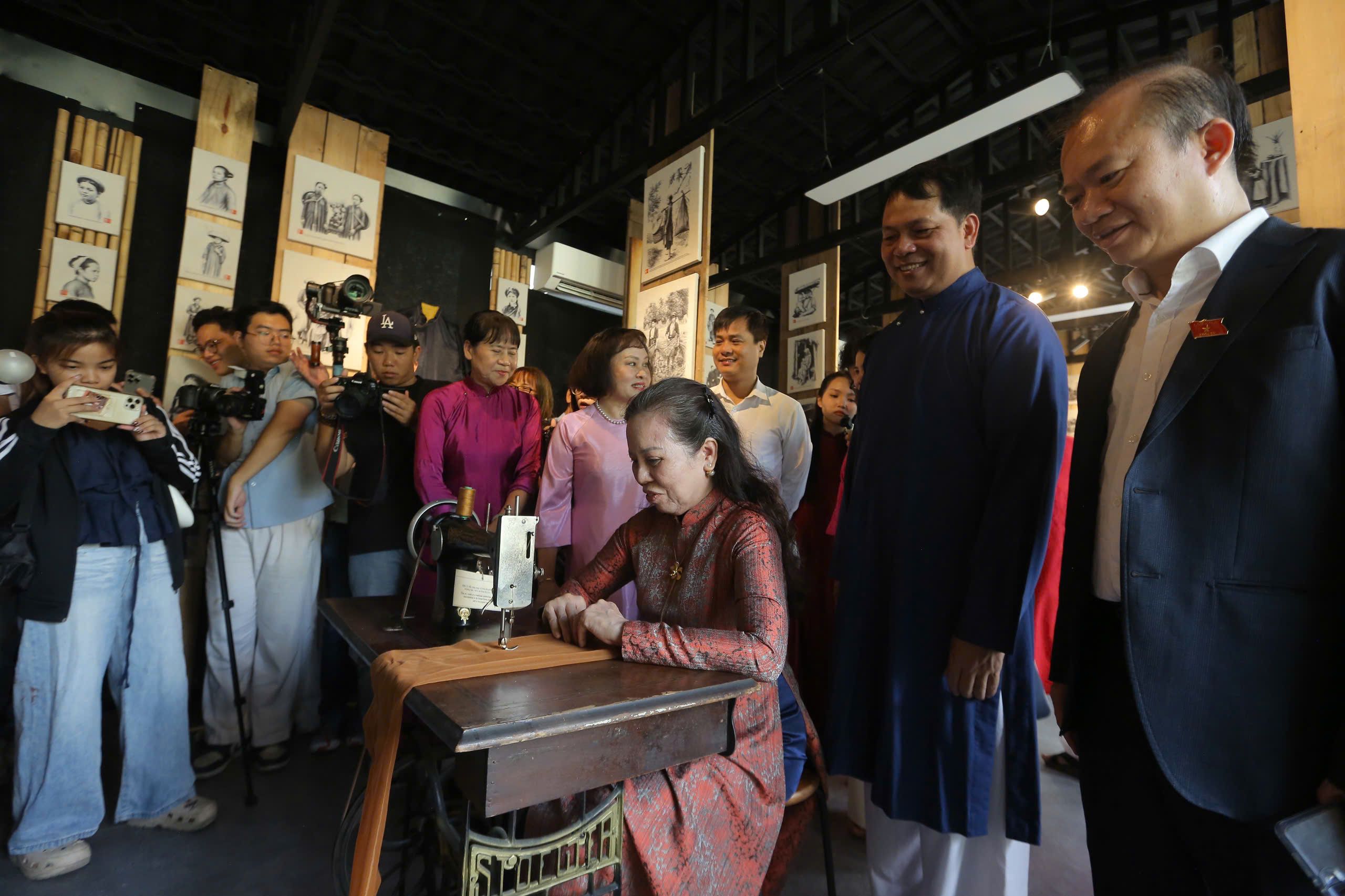
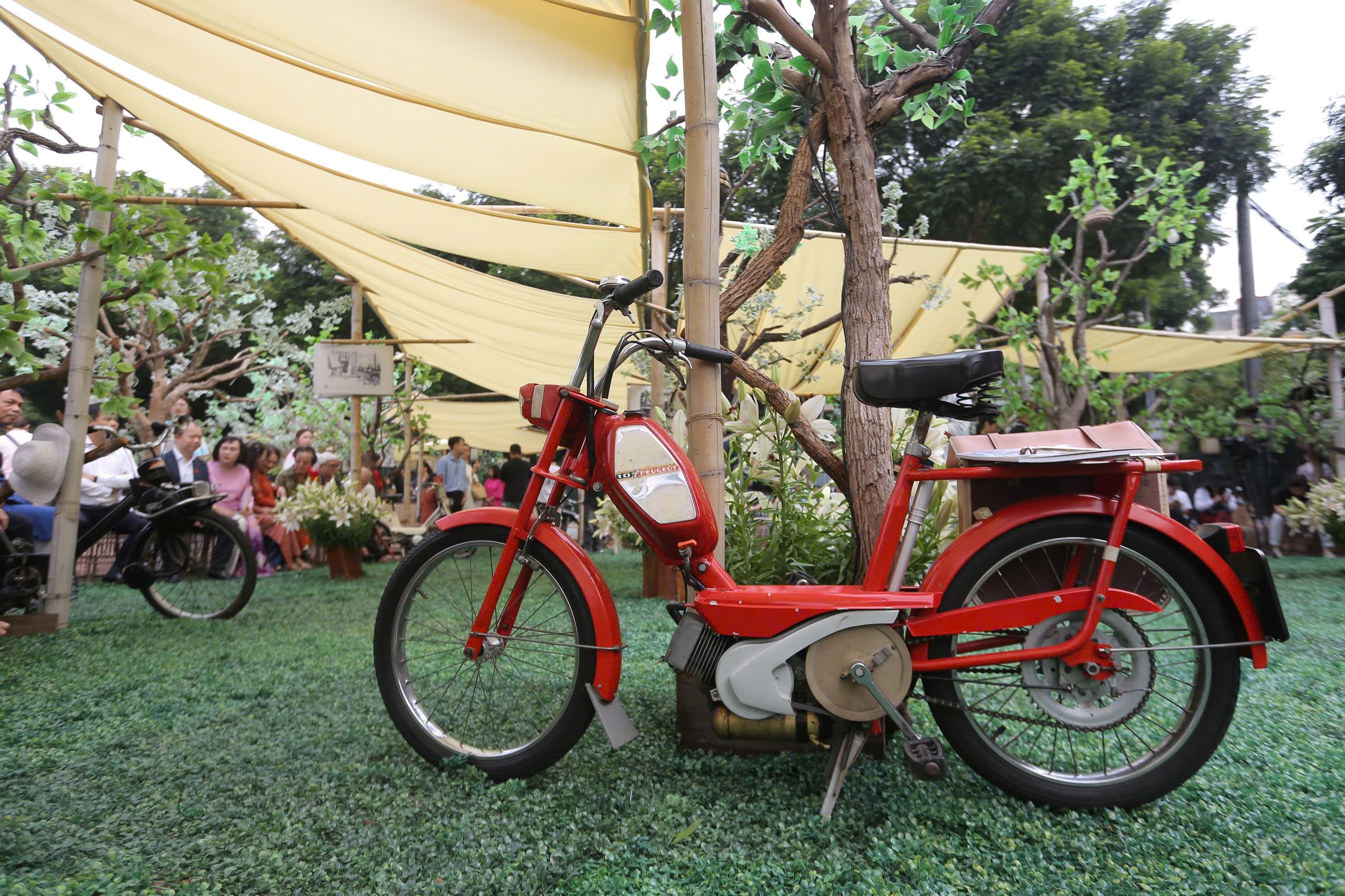
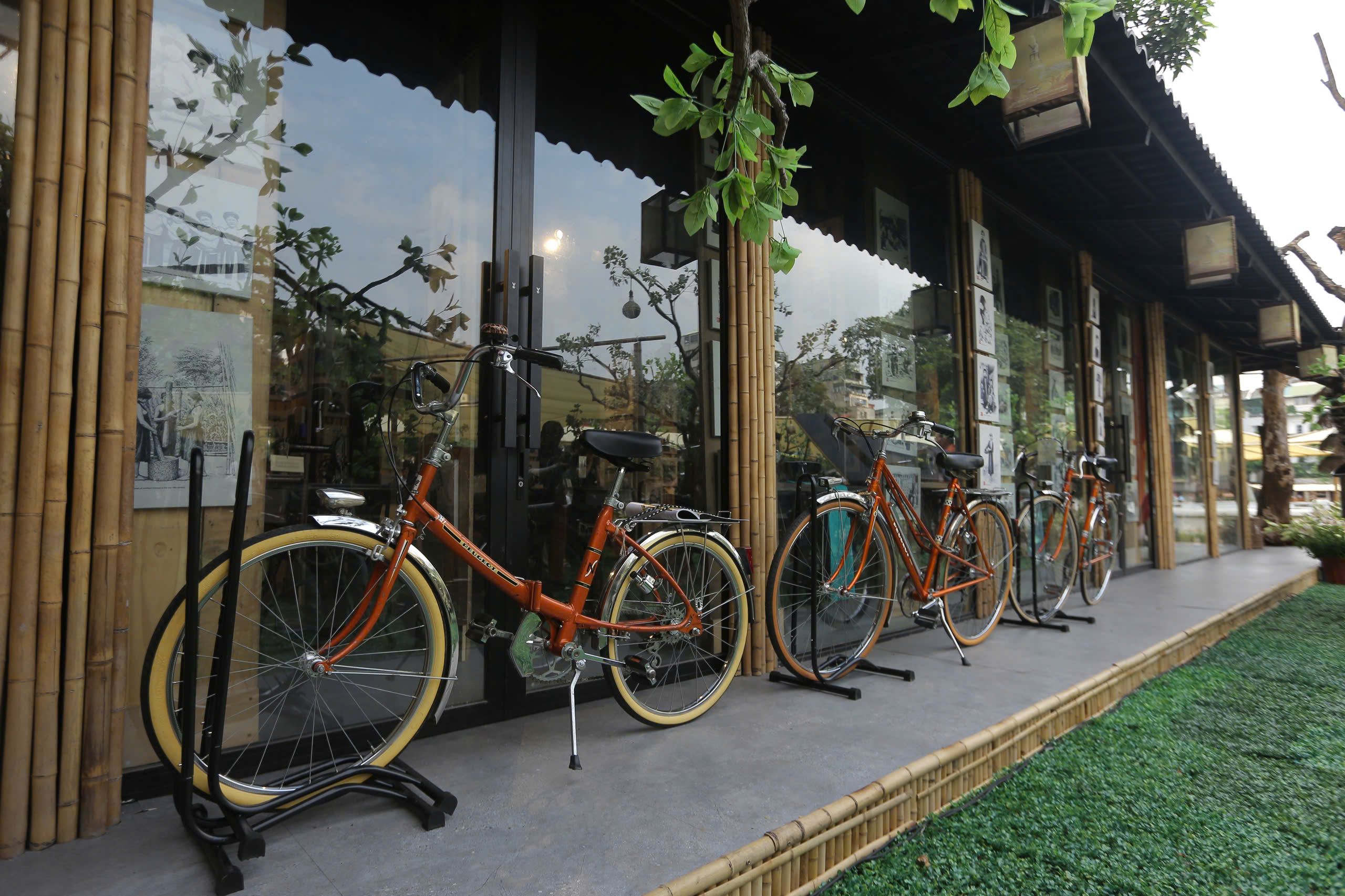
The exhibition also features 12 antique sewing machines, five vintage Peugeot bicycles, and two vintage Peugeot motorized bicycles from the collection of Đào Xuân Tình. These seemingly ordinary objects evoke fascinating stories about traditional occupations, transportation, fashion, and the rhythms of everyday life in Hanoi in years gone by.
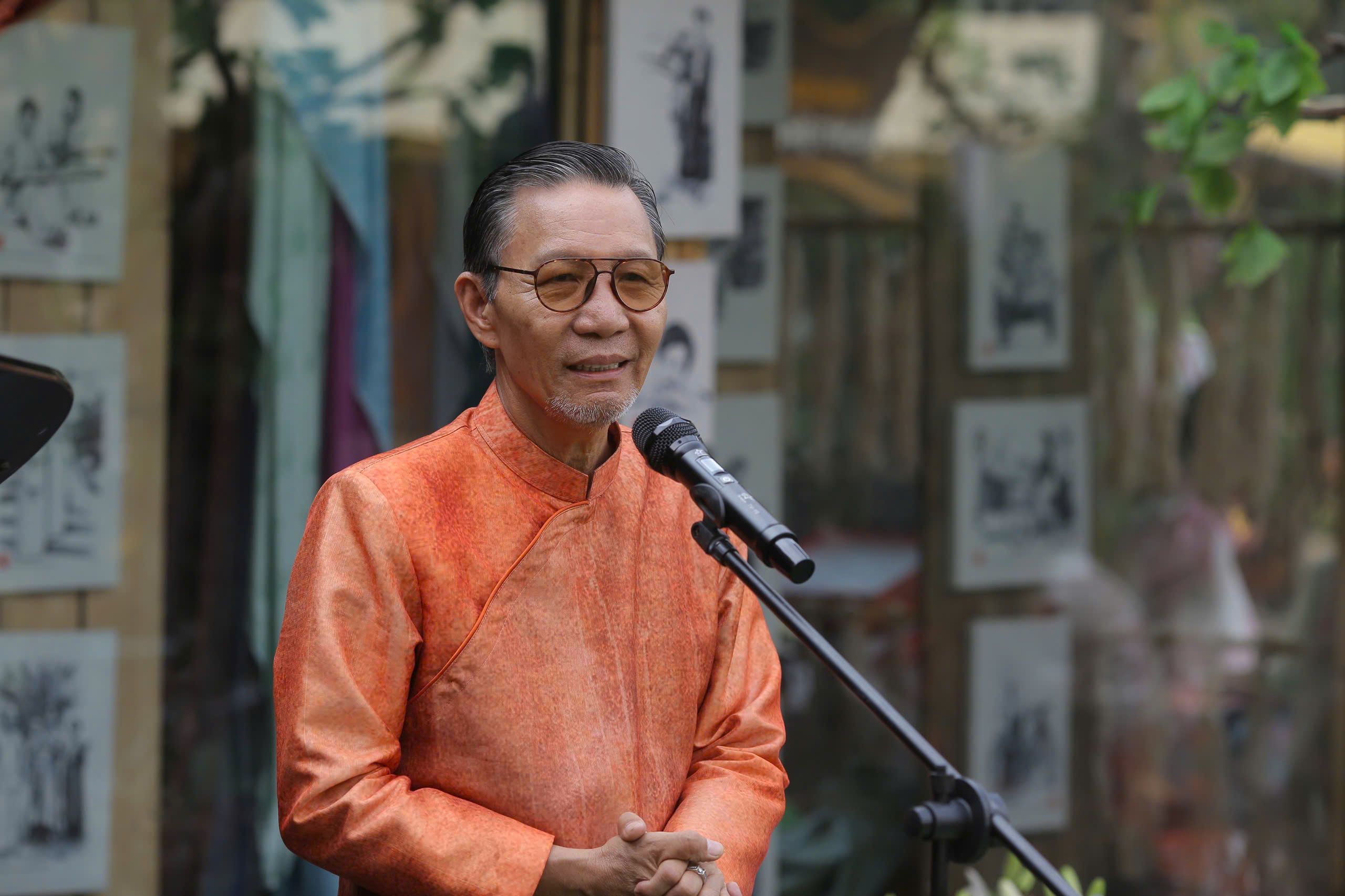
For more than 20 years, collector Đào Xuân Tình has devoted himself to collecting Peugeot bicycles. His collection now comprises approximately 300 bicycles manufactured between 1918 and 1988. Speaking at the event, he shared that collecting is not simply about preserving objects from a bygone era, but also about safeguarding memories of Hanoi—from bicycles and the familiar ringing of their bells to the streets and rhythms of daily life that have remained deeply embedded in the memories of generations.
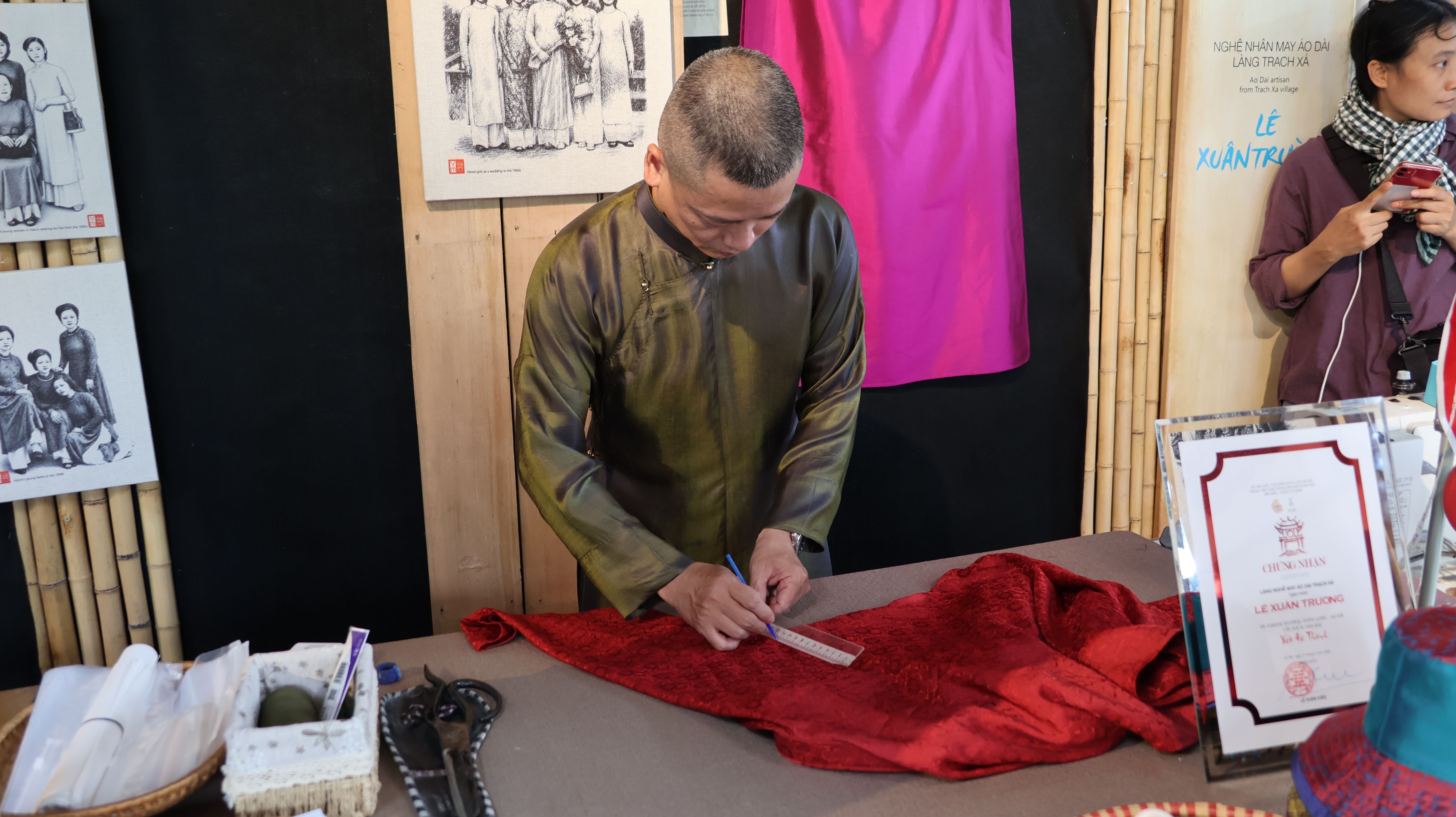
Contributing to the exhibition’s presentation of traditional áo dài, artisan Lê Xuân Trường from Trạch Xá tailoring village introduced approximately 20 áo dài designs inspired by historical styles. These garments showcase the village’s distinctive tailoring techniques, particularly the construction of garments without shoulder seams and the meticulous craftsmanship involved in shaping each piece by hand.
The sleeves are cut as a continuous piece extending from the neckline to the wrists, without separate shoulder seams. Through his participation in the exhibition, the artisan hopes to raise awareness of the traditional áo dài tailoring craft of Trạch Xá, a long-established tailoring village in Hanoi, while bringing traditional áo dài closer to younger generations.
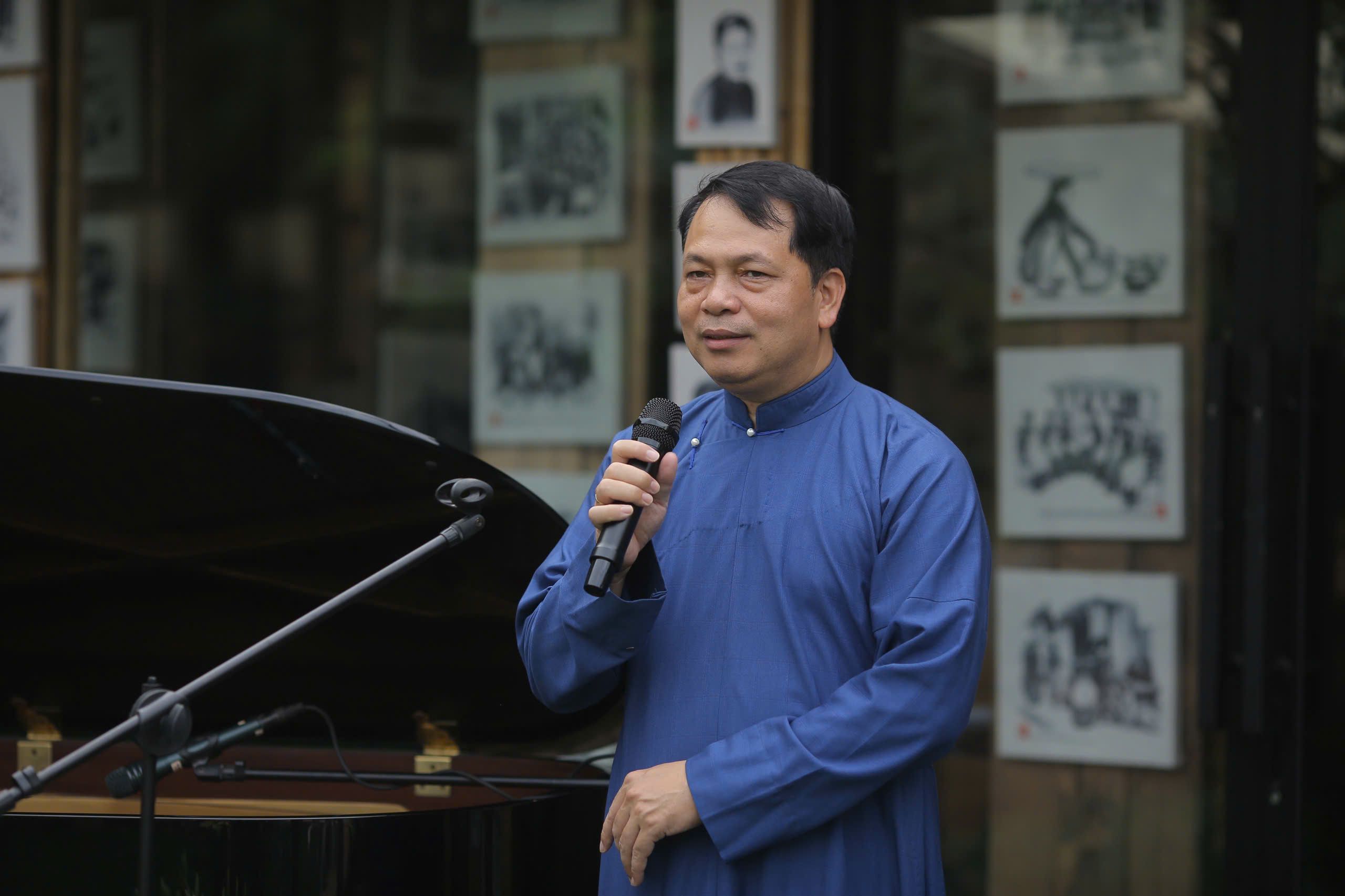
Speaking at the event, Dr. Lê Xuân Kiêu, Director of the Center for Scientific and Cultural Activities of Văn Miếu - Quốc Tử Giám, shared:
“The ‘Hanoian Elegance’ exhibition at Văn Lake, Văn Miếu – Quốc Tử Giám, represents a meaningful encounter between heritage and everyday life, between memory and creativity, and between tradition and the contemporary world.
As we approach the 950th anniversary of the founding of Quốc Tử Giám, we are increasingly aware of our responsibility to make heritage a vibrant part of contemporary life.
Through an áo dài, a bicycle, a sewing machine, or the skilled hands of an artisan, we can glimpse both the Hanoi of the past and the Hanoi whose story continues to unfold today.”
Set against the historic surroundings of Văn Lake, where traditional heritage meets contemporary creativity, “Hanoian Elegance” adds another distinctive chapter to the 2nd Thang Long – Hanoi Festival.
It is a story of Hanoi told through the graceful silhouettes of the áo dài, the familiar objects of everyday life, and the seemingly ordinary memories that have helped shape the unique cultural identity of the city.
BP